
Introduction
Ultrasonography (USG) for thyroid nodules is a safe and painless test. It uses sound waves to create images of the thyroid gland in your neck. Because thyroid nodules are common, USG is often the first step in checking them. This test helps doctors see if a nodule is harmless or needs more tests. In this blog, you will learn why USG is important, what to expect, and how it helps with thyroid nodule diagnosis.
What Are Thyroid Nodules?
Thyroid nodules are small lumps that form in the thyroid gland. The thyroid is a butterfly-shaped gland at the front of your neck. Most nodules are not cancer. However, some can cause problems or need treatment. Often, people do not notice any symptoms. Sometimes, you might feel a lump or swelling in your neck. In rare cases, nodules can cause trouble with swallowing or breathing.Most thyroid nodules are harmless.Some nodules may produce extra thyroid hormone.A few nodules can be cancerous and need quick care.
What Is Ultrasonography (USG)?
USG, also called ultrasound, is a test that uses sound waves to make pictures of the inside of your body. For thyroid nodules, USG shows the size, shape, and number of nodules. Unlike X-rays, USG does not use radiation. Therefore, it is very safe for everyone, including children and pregnant women.
Why Is USG Used for Thyroid Nodules?
Doctors use USG for thyroid nodules because it gives clear images. With USG, they can:See if a nodule is solid or filled with fluidCheck the size and exact location of nodulesLook for signs that may suggest cancerGuide a needle if a sample is needed (biopsy)
Moreover, USG helps track changes in nodules over time. It is also useful for planning treatment if needed.
How Is a Thyroid USG Performed?
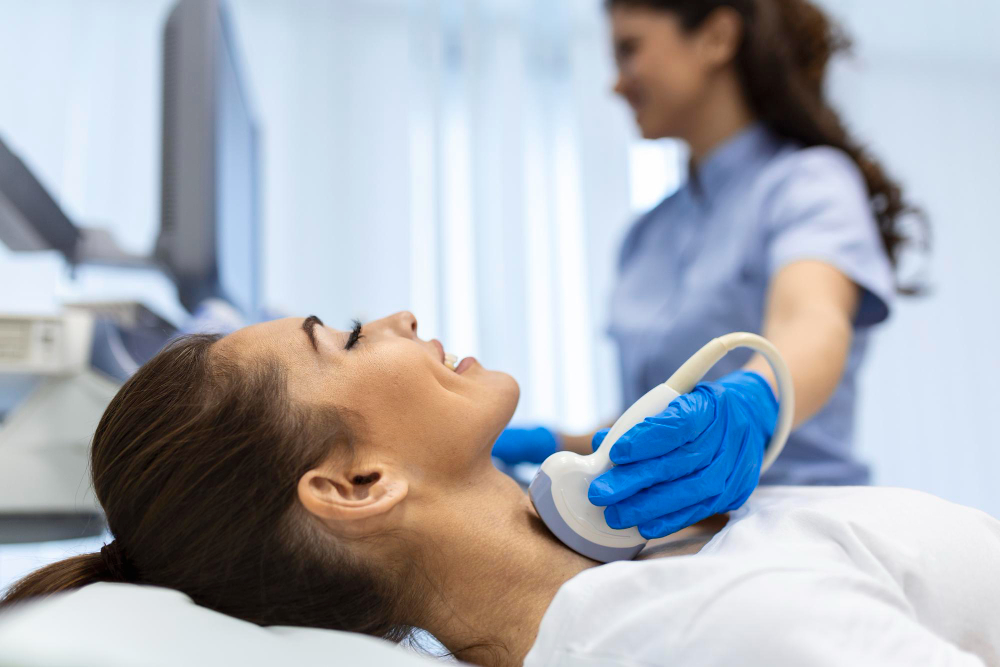
During a thyroid ultrasound, you will lie on your back with your neck slightly stretched. A small amount of gel is placed on your neck. Then, a device called a transducer is moved over the skin. The transducer sends sound waves into your neck and picks up the echoes. These echoes create pictures on a screen. The test usually takes about 15 to 30 minutes.
What to Expect During the Procedure
Before the test, you do not need to do anything special. You can eat and drink as usual. During the test:You may feel cool gel on your skin.The transducer may press gently but should not hurt.You will need to stay still and breathe normally.
After the test, you can return to your normal activities right away. There are no side effects or recovery time needed.
Understanding USG Results
After the ultrasound, a doctor will look at the images. They check for:Size and shape of the thyroid glandNumber and size of nodulesFeatures that may suggest cancer, such as irregular edgesSigns of fluid or solid material inside the nodule
Sometimes, the doctor may suggest more tests, like a fine needle aspiration (FNA) biopsy, if the nodule looks suspicious. However, many nodules are simply watched over time with repeat USG exams.
Benefits and Limitations of USG for Thyroid Nodules
USG has many benefits for thyroid nodule diagnosis:It is safe and painless.There is no radiation exposure.It gives quick and clear results.It helps guide further tests, like biopsies.
However, USG also has some limits. For example, it cannot always tell if a nodule is cancer. Sometimes, other tests are needed. Also, very small nodules may be hard to see. Despite these limits, USG remains the best first step for thyroid nodule evaluation.
When to Consult a Doctor
If you notice a lump in your neck or have trouble swallowing, you should see a doctor. Also, if you have a family history of thyroid cancer, talk to your healthcare provider. Early evaluation with USG can help find problems sooner. If you are searching for a “thyroid ultrasound near me,” ask your doctor for a trusted clinic or hospital in your area.
Conclusion
Ultrasonography (USG) for thyroid nodules is a safe and helpful test. It helps doctors find and monitor thyroid nodules with ease. If you have concerns about your thyroid or notice a lump, consult a healthcare specialist at Sri Prathyusha Diagnostics for personalized advice about thyroid nodules and ultrasonography.